Related explorations
→ How candle physics break dungeons
→ The hidden goblin workforce (this post)
→ My JavaScript descent into madness
There’s a creature you won’t find in any bestiary or RPG credits, and most scholars, adventurers, game designers, and historians overlook it. Yet, this unseen figure shapes every dungeon. Deep below, in the still halls of forgotten castles, one tireless being keeps the fantasy world from slipping into darkness, dust, and chaos.
Scholars, though hesitant, call him the Dungeon Caretaker Goblin.
I. Encyclopaedia: The Gulussus Operarius Subterraneus
The Dungeon Caretaker Goblin appears in just a handful of odd manuscripts, but he’s essential to life underground. He’s small, smells oddly pleasant, and is often frustrated with his job. Still, he has a rare talent for keeping places together that, by all logic, should crumble to dust in days.
Most people see a dungeon as a mysterious, ancient place, but he sees a job site with broken walls, water damage, shaky stones, and lights that shouldn’t work. He isn’t after treasure or mischief—he just cares about keeping things in order. Without him, torches would burn out fast, traps would fall apart, and those moody hallways would just become forgotten caves. No one notices or thanks him, but his work is crucial. Whatever led him to this job, one thing is certain: dungeons wouldn’t work without him.
“The Goblin” artwork was generated by an AI assistant under the close supervision of the Dungeon Caretaker Goblin.
II. A Morning in Stonewhisper Dungeon
Every day starts the same way: total darkness. Dawn never makes it into Stonewhisper Dungeon, almost as if the sun is put off by the place. In a storage room with a stool, a broom, and a half-finished mug of old fungal brew, the Dungeon Caretaker Goblin wakes up, ready for another day where things are bound to break—or maybe even explode.
His main job is lighting. He walks through chilly hallways, lighting each torch with a practiced flick he’s mastered over the years. Some torches light up right away, bright and steady. Others stay out, thanks to dampness, neglect, or what he calls “hero-related extinguishing events.” He gets them all burning again, bringing back the warm glow that adventurers just assume is always there.
By the time he gets to the main hall, the place is already warm. Hundreds of torches give off enough heat to make it feel like an underground spa, but he keeps things comfortable by making small adjustments, using secret vents he made himself, and sometimes just ignoring the rules of physics.
Next, he checks the traps. Blade halls, pressure plates, swinging axes—old inventions that somehow still work. The goblin looks over each one, tightens bolts, oils gears, and sometimes tests the timing with a spare bone. Adventurers rush past these traps without noticing, but to the goblin, they’re like coworkers who sometimes try to take him out.
He calls the dungeon staff together: two skeletons, a giant spider, and an ooze who technically works there but never sticks to the schedule. He tells them about the adventurers who might show up, reminds them not to attack too soon, and asks the spider to cut back on the cobwebs in the north alcove because they mess up the look. Then he arranges bones by the doors, moving them around until they’re just right—spooky enough to tell a story, but still a real obstacle.
When he’s done, he sips his mold brew, hears the distant sound of intruders, and mutters, “Please don’t smash the pots this time.” It’s not hope—it’s just tradition.
III. Magic, the Lazy Answer to Impossible Design
Even the hardest-working Caretaker Goblin can’t fix everything with effort and determination. Some problems are just too big: smoke that should fill the dungeon, torches that should burn out fast, spiders that shouldn’t be able to stand, and traps that should have rusted away long ago.
By all logic, none of this should work.
But in reality, dungeons are full of what scholars politely call magic—and what the goblin calls “the universal excuse.” Magic is the answer for anything that doesn’t make sense. If a torch never goes out, it’s probably enchanted by a wizard who didn’t want to do maintenance. If a trap resets itself, it’s because someone used magic instead of oil. If giant spiders survive in impossible places, well, that’s just magic too.
For the goblin, magic is both helpful and troublesome. It makes his job possible, but it also creates half the problems he has to solve. When everything is held together by spells—some barely remembered—nothing is ever really stable. One wrong rune can put out every torch, flip gravity in a hallway, or make a skeleton start talking back.
And every time, he’s the one who has to fix it before the adventurers show up.
IV. Science, Smoke, and the Reality Underneath the Stones
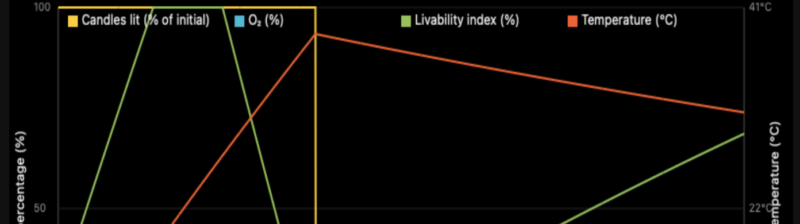
Underneath all the stories and chaos, there’s a funny kind of scientific nonsense. Hundreds of torches in small hallways should make the dungeon unbearably hot. Without vents, smoke would fill the place in minutes. Giant spiders, living skeletons, and old traps shouldn’t work at all, but with a mix of magic, hard work, and goblin know-how, the dungeon somehow keeps going against all logic.
Players who want a more “realistic” dungeon sometimes add lighting mods to Skyrim—like Realistic Lighting Overhaul, Enhanced Lights & FX, or True Darker Dungeons—only to find the game nearly impossible without a lantern. For the first time, they see the dungeon like the goblin does: dark, dangerous, cold, and always on the edge of falling apart unless someone keeps it running.
After that, they never look at dungeons the same way again.
Photography taken by an AI Assistant during the visit to the Stonewhisper Dungeon.
Conclusion: The Beauty of the Impossible
In the end, the Dungeon Caretaker Goblin is more than just a fun story. He stands for everything wild, strange, magical, and amazing about RPG worlds. Without him, dungeons would be empty; with him, they come alive. He keeps the torches lit, the traps working, the mood just right, and the whole place running in ways that science and realism can’t explain.
Still, after all the jokes and fake science, one thing remains true:
Skyrim’s dungeons, and all fantasy dungeons, are exactly as impossible as they should be.
Dungeons glow, shake, fall apart, and break every rule of physics—not because it makes sense, but because it makes them unique. It makes them magical.
That’s what makes them great. The goblin understands this better than anyone.
He keeps the magic going, and he wouldn’t change a thing.
Photo by Shaida Safi (header), OpenAI generated (text illustration)